Delivery control and clear ownership
RAID logs and RACI matrices in the project plan.
A plan needs more than dates. It should identify who delivers and approves each output, what could disrupt delivery, and which decisions need escalation. SCP would link the records below to workstreams, milestones and deliverables, with named owners and a proportionate review rhythm.
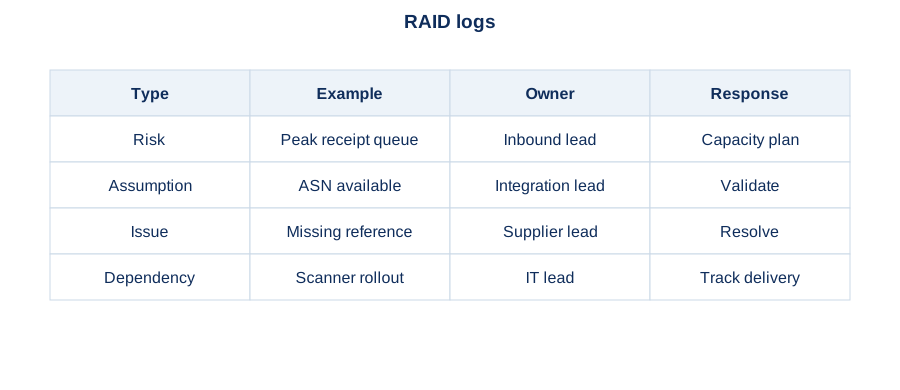
RAID: risks, assumptions, issues and dependencies
- Risks: uncertain events that may affect objectives. Record likelihood, impact, response, owner, trigger and remaining exposure.
- Assumptions: planning statements not yet confirmed. Record how and when they will be validated and the consequence if they prove false.
- Issues: problems already present. Record the impact, action owner, resolution date and decisions needed.
- Dependencies: inputs or commitments needed from another activity, team or supplier. Record the supplying and receiving owners, required-by date and affected milestone.
Use a unique ID, linked work item, status, last review, next action and due date. Review high-impact or overdue items and escalate against agreed tolerances. Link a risk that materialises to its resulting issue; retain the history. Keep decisions and change requests linked rather than losing them in meeting notes.
Example: a supplier interface specification is due before integration design can be approved. Track that dependency, its owner and required date; assess and escalate any delay against the development milestone.
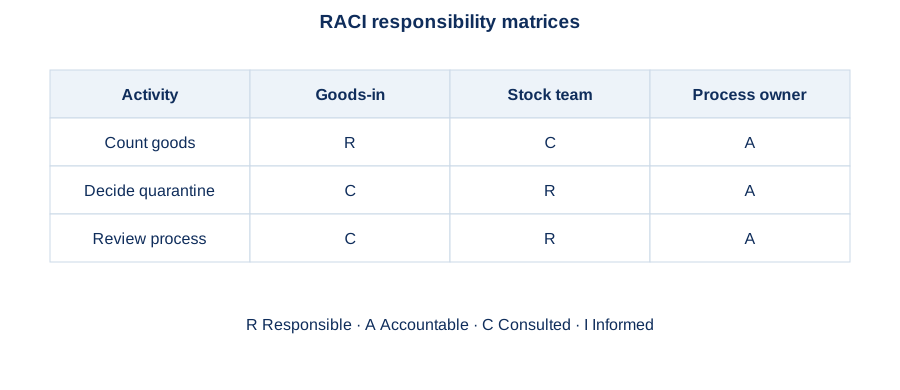
RACI: responsible, accountable, consulted and informed
- Responsible: the person or people who perform the work and produce the deliverable.
- Accountable: the named owner answerable for the deliverable or decision, with the authority agreed for that scope.
- Consulted: people whose expertise or input is needed before the work or decision is completed; communication is two-way.
- Informed: people who need to know the outcome or progress, without being required to approve it.
For each deliverable or decision, SCP would normally agree one accountable owner and at least one responsible owner. Check that they accept the assignment and have the capacity and authority to act. A person may hold both roles where appropriate.
Use rows for concrete outputs, such as the functional specification, interface design, UAT completion or release decision. Match them to plan IDs, completion criteria and dependencies. Refresh the matrix when scope, suppliers or roles change.
Illustrative example: provider-written functional specification
- Responsible
- The provider’s analyst authors and revises the specification.
- Accountable
- The client’s designated business owner approves its business scope, or explicitly delegates that authority.
- Consulted
- SCP, operational users, technical, security and testing representatives review the relevant content.
- Informed
- The project manager and affected workstream leads receive the decision and approved version.
SCP may instead own authorship or delegated approval where agreed. Identify technical-design approvals separately where different authority is needed. The RACI records those responsibilities; it does not replace the specification review or acceptance criteria.
RAID definitions can vary between organisations; agree them before use. Risk, issue and assumption records can remain in separate systems if they are connected and reviewed consistently. The same ownership and escalation discipline applies in Waterfall, Agile and hybrid delivery.
References: APM: responsibility and RACI ↗; UK Infrastructure and Projects Authority: project-initiation lessons ↗. Reviewed 17 October 2026. Record fields, review practices and the example are SCP proposals.
Explore specification and design reviews →